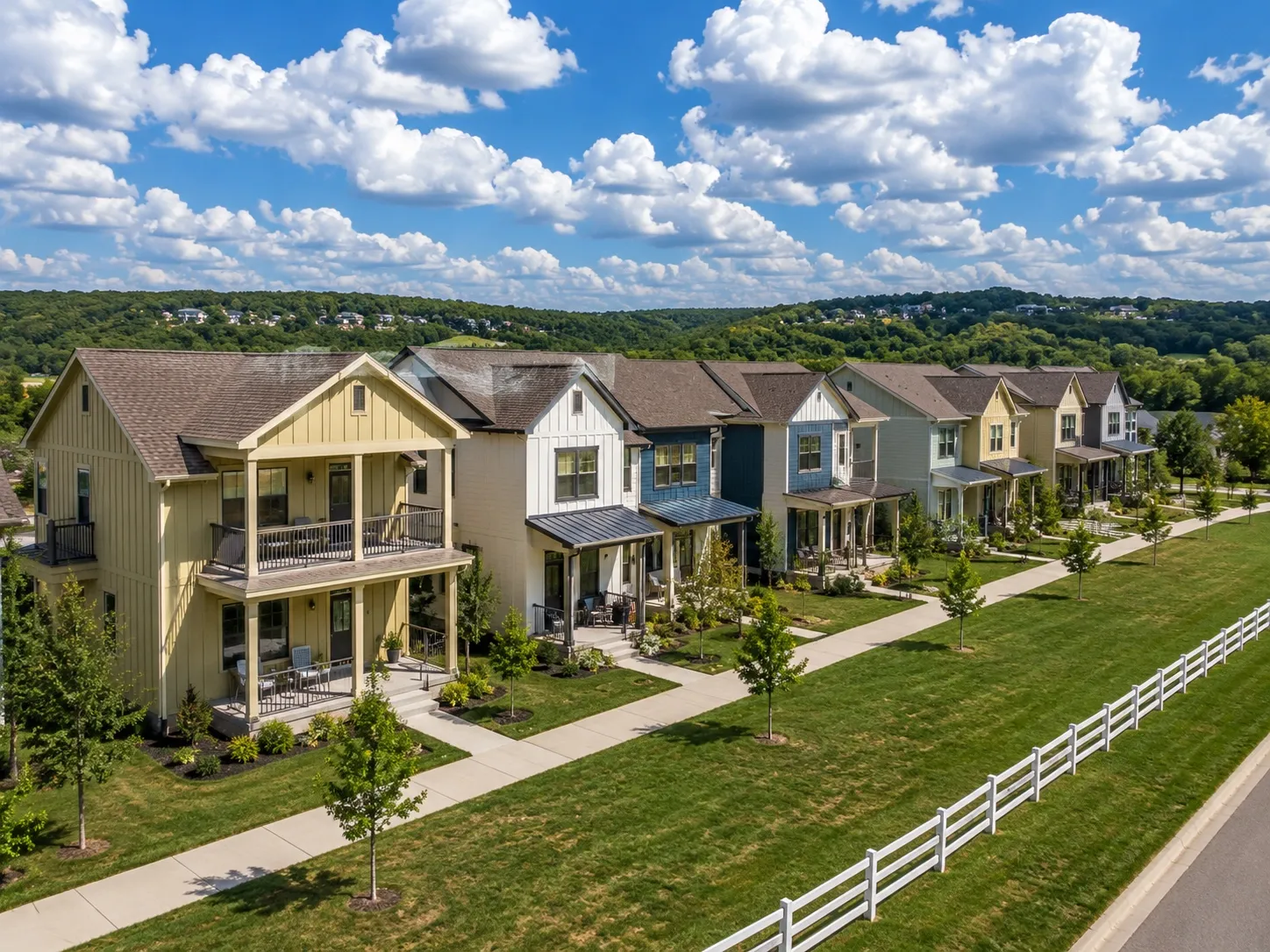
Southwest Austin
Dripping Springs
Hill Country space and a small-town feel, still an easy drive from Austin.
Buyers who want more land and a Hill Country setting, and don't mind trading a few extra commute minutes for it.
As of Jul 2026, the typical home price in Dripping Springs, TX is $719,000 — compared with $595K for the City of Austin (Realtor.com; Unlock MLS, May 2026).
Austin comparison: Unlock MLS, May 2026. Dripping Springs figures: Realtor.com · Community Impact.
A 3-4 bedroom resale on a standard lot
Newer construction or a home with real acreage
If value and space matter more than proximity, the Northwest suburbs — Cedar Park, Leander, Round Rock, and Georgetown — are worth a look too.

Dripping Springs sits in genuine Texas Hill Country — rolling land, live oaks, and a small-town square, plus a well-known wine and brewery scene (it's sometimes called the "Wedding Capital of Texas" for its event venues). It's grown fast in recent years, so you get small-town character alongside real new-construction activity, not a sleepy backwater.
Dripping Springs ISD carries a B (89/100) in the 2024–25 TEA accountability ratings, up 3 points from the year before — 3 of the district's 8 campuses earned an A, and students have consistently outperformed state STAAR averages across subjects.
It's the longest commute of Indu's priority towns — you're trading drive time for space and Hill Country setting. Realistic for Austin-area jobs with some flexibility on start time, less so for a daily downtown 9-to-5 without traffic tolerance.
In the $550K–$720K range, expect a 3-4 bedroom resale on a standard lot. Push into $720K–$1M+ and you're typically looking at newer construction or a home with real acreage — lot size varies more here than in the closer-in suburbs.
Similar value proposition — more space for the money than the City of Austin — but skewing a bit higher-end, with acreage and Hill Country lot premiums the Northwest suburbs don't have. Listings have run from roughly $610K–$720K median depending on the source and month sampled (Homes.com and Realtor.com, July 2026), reflecting how much the active-listing mix shifts month to month — worth treating as a range, not one fixed number.